Are you interested in a country called Spain, that it is much more than bullfighters and flamenco? Do you feel like knowing something more about its culture, people, idiosyncrasy or its current situation? Please, come in

Thanks to these friends for following

Saturday, 30 April 2011

CLOSED FOR REST


For a few days there will be no new posts, because I'll be on holiday on the beach, to relax and unwind from my daily job and from my blogger work, because making and keeping updated three blogs it is not a simple work and even more if you are a conscientious and a perfectionist person like me  (lol) and although I really enjoy posting and it gratifies me very much about writing articles, researching news and posting my photos in the photoblog, it also takes me up a lot of time and energy.

So for a few days I will devote to doing NO-THING, well, perhaps ..... I could read a book, stroll along the beach, taking pictures at sunsets, watch the boats rocking in the sea, eat, sleep, kick the alarm clock when I wake up in the morning...... ... hahahha ..... well, more or less, that's my whole idea.

But while I am resting, whoever wants to keep on walking through my three blogs, can keep doing it because they will be open wide for anyone who wants to visit them.

A big kiss and a hug and I'll be back in a few days!

Friday, 29 April 2011

SPANISH ROYAL FAMILY AT ENGLISH ROYAL WEDDING


Spanish Royal Family attend today to the wedding of Kate Middleton and William of Wales at Westminster Abbey and this is a small review of it.

Princess Letizia was dressed with a Felipe Varela design (one of her favourite designers), the soft pink dress has embroidered flowers and chiffon sleeve  combined with a pretty hat and classic heels, all in the same tone with a nice nude colour. A sober look, elegant, sophisticated, according to occasion and certainly nothing extravagant as we see with some of the guests. For his part, Prince Philip wears the ceremonial suit, typical of these occasions: the uniform of Commander of the Navy.


They attend a gala pre-wedding dinner held at the Mandarin Oriental Hyde Park on 28th in London.


The Queen and the Princes of Asturias will make a donation to a charity as a wedding gift to Prince William and his fiancee, Kate Middleton (already Duchess of Cambridge) who have suggested to the guests rather than offering gifts.
Spanish Miriam Gonzalez Durantez, Nick Clegg's wife
was another guest to the Royal wedding,
with a Miguel Palacio design she was one of the best dressed
Happy and long live the bride and groom!
¡Vivan los novios!

Thursday, 21 April 2011

¡FELIZ SEMANA SANTA! HAPPY EASTER!


Since this year I haven't had enough time to post something new about this celebration, please allow me to leave here some posts about Easter in Spain which I wrote last year and where you can get to just clicking on the link. With some words explaining about this celebration in Spain, with some photos taken of a procession (a religious parade) and with a yummy recipe about the most typical  dessert we enjoy on these Easter Holidays: las torrijas.


I hope you enjoy the three posts!
And Happy Easter for all the bloggers friends
and friends and new visitors!

Friday, 15 April 2011

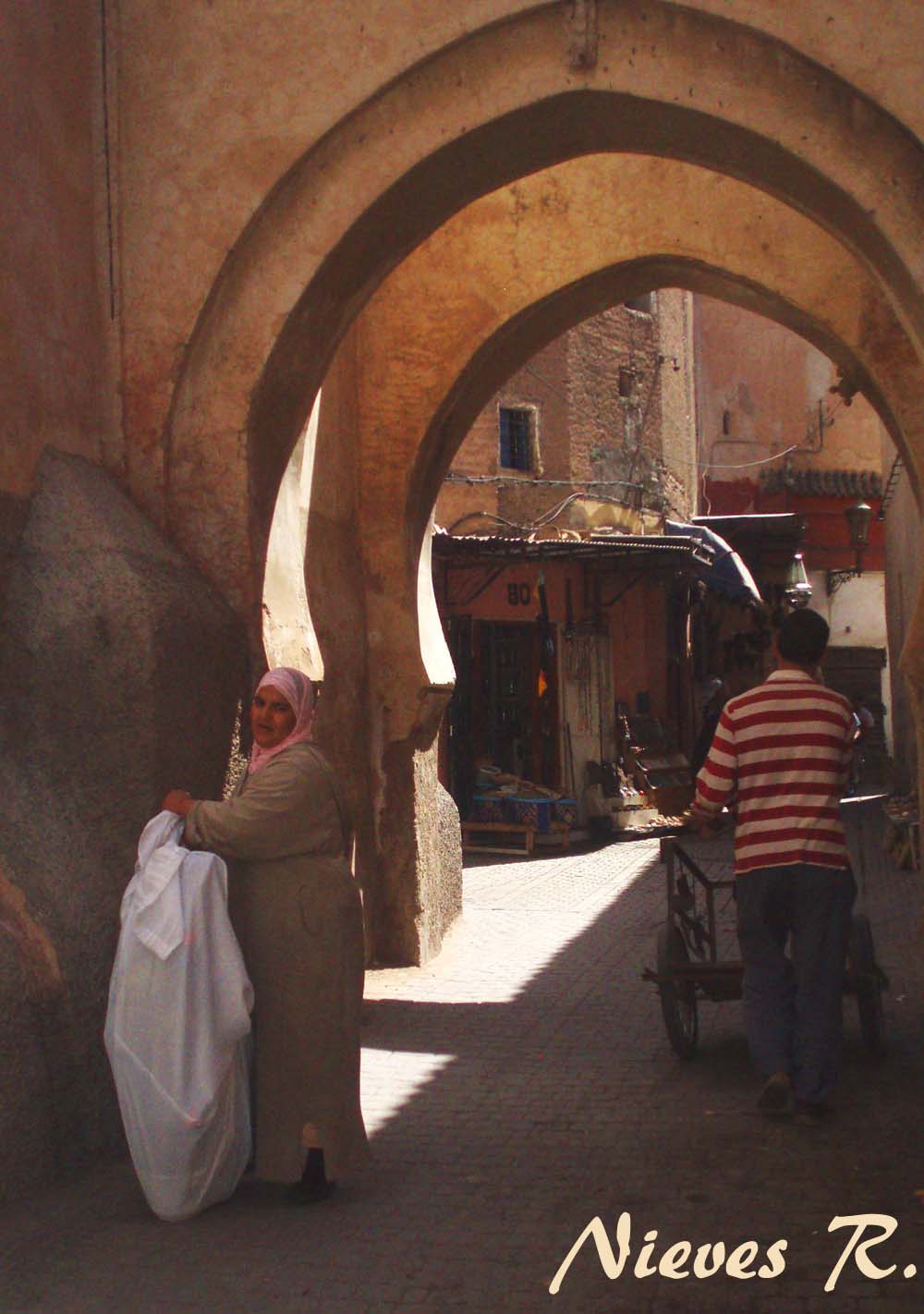
MARRAKECH EXPRESS TRIP


Today it's a trip's story post and this is about a journey to Marrakech made three years ago. I hope you enjoy it!

In distance just a few hundred miles from here, Morocco can be seen as a world apart, yet it is a world everyone living in the south of Spain, including the Spanish themselves, should visit. We made a short trip to Marrakech and Rabat recently, a trip made easy now by the availability of cheap flights and improved roads. Leave the motorway and the airport behind though, and you are quickly in the exotic world of the Souk, the Riad, the Kasbah and Moorish palaces.

The first vision we had as our flight was landing at Marrakech airport was rows and rows of ochre and grey houses in perfect alignment, testimony to the new development being encouraged by Morocco´s king Mohammed VI. After landing we were kept waiting in a long queue for Passsport Control, our first taste of Moroccan bureaucracy. Then began the first of many bargaining sessions we would realize over the next few days, as we shopped around for a taxi, settling instead for the bus which took us to the Medina (the old city) for less than two euros. Immediately we realized that driving in this city isn’t easy, with the melee of cars, mopeds, scooters, bikes and donkeys pulling carts, not to mention the horses and carts for the tourists. The worst shock is that this traffic surrounds you as you are walking in the Medina as well. 


When we arrived in the Place Jemaa el Fna, night had drawn in and we found this huge square heaving with people. Feeling lost and very conspicuous with the map in hand, we managed to arrive in the right area, only to find a labyrinth of streets with poor lighting where you could easily get lost in trying to find the right direction. Of course a few dirhams helped us to find the way to the Riad, dirhams being the essential resource to pay street kids in Morocco. These kids are difficult to resist (or shake off!) when they are trying to sell you something, and they can change from sweet cherubs to tough limpets in a moment; one lesson you learn is that you can never have too much change!


Riads are private houses usually belonging to good families which were converted into lodging houses, keeping all of the charm and oriental decoration of the original house: bright colour cushions scattered everywhere, elaborately engraved doors and ceilings, trees and exotic plants everywhere, roof terraces where you can relax and where breakfast is served with exquisite orange juice, different types of bread, honey, marmalade and delicious coffee.


Despite its name (the Place of the Dead), Place Jemaa al Fna is an enormous very lively square, Marrakech’s own theatre, where you can find musicians skilled in gnaoua (subsaharan music with arab/berber influences), or snake charmers, or women doing henna tattoos or story tellers or sellers of miracle cures or acrobats or barrows where they make fresh orange juice (at only 30 cents a cheap and healthy way of calming your thirst as often as you need).

When sunset comes Place Jemaa el Fna reaches its peak of activity and the food stalls get into gear, selling lamb and chicken tajine, Moroccan salad, kebabs, cous cous and many other local specialities, all of these at cheap prices. You can even eat roast sheep heads (including the eyes!) washed down by mint tea. In fact, the Place smells at night like a giant barbecue!. But if you want a beer you have to hunt it down, we found only the Grand Hotel Tazi (just ask any taxi driver for the Tazi!).


If you don’t have much time to stay in Marrakech, best go to the Place Jemaa el Fna and climb to one of the terraces in several bars and cafes and ask for a mint tea. From here you can watch everything going on in the square and gaze at the Koutoubia Mosque and recharge your batteries before entering the souks, which are the commercial heart of the Medina and the reason for many people’s visits to Marrakech.


The Medina is a beautiful amalgam of colours and smells, where you can buy leather goods of all types, lamps, rugs, lovely kaftans, spices for cooking, cosmetics and perfumes, such as henna or khol, and you can even find a special Moroccan Viagra (my lips are sealed on this one). In the Medina you could even live (or should I say survive) the experience of having a haircut in a local barber’s shop, although I must admit I was a bit apprehensive when he sterilised the razor over a naked flame.  


Equally you should go to the Kasba and the Mellah (the old Jewish quarter). And for relaxation get away from the Medina, take a taxi and visit the Majorelle Gardens, which are an oasis of plants from the five continents, designed by the French artist Jacques Majorelle. Here you can also view the shrine to Yves Saint Laurent, who was a major influence in improving the gardens after his friend died in 1963.
 

If you have a few more days then you will find it interesting to visit the Bahia Palace, the Cadi Palace, the Museum of Marrakech, the Saadiams Tombs, the Medersa Ali Ben Youssef (Koranic School) or the Museum of Moroccan Arts.


Marrakech is, in essence, a very medieval and exotic city: from here you are close enough to be in the middle of an oriental tale in less than half a day. Just make sure it isn’t Ali Baba and the 40 Thieves – take care of your dirhams and euros, take your time to shop around, and don’t try to carry the souk home with you!


Written by Tim S. and Nieves R.
Photos taken by Nieves R.

Sunday, 10 April 2011

PRINCE CHARLES & CAMILLA AND DAVID & SAMANTHA, TWO DIFFERENT WAYS TO VISIT SPAIN


Prince Charles and his wife Camilla, duchess of Cornualles were visiting Spain this week for three days, after visiting Portugal and before leaving for Morocco on Saturday. And during the same dates Prime Minister, David Cameron was coming to Granada with his wife Samantha as a present for her next 40th birthday, since she really likes Spain. And I have thought of making a post rescuing several anecdotes of both journeys.

Related to the Royal visitors, firstly I have to say that there are especial family knots that Spanish and British Royal families share: Queen Victoria of England was great-grandmother Queen Sofia and Prince Charles is also a second cousin of Queen Sofia through King George I of Greece.


Although his official hosts are the prince and princess of Aturia, Prince of Wales and the Duchess of Cornwall stayed at the palace of El Pardo, which in theory is only reserved for heads of state. They were received by Prince Felipe and Princess Letizia last Wednesday late in the morning. Firstly, under a hot sun (even a Royal guard couldn’t stand the sun and got fainted) they were taken to the Plaza Mayor (the center of the old city of Madrid) and to a especial delicatessen market- Mercado de San Miguel- where they declined to taste one of the most typical products of this country, cured ham (have you ever tried? I really love it!), but instead they preferred to enjoy a delicious (according to them) apricot yoghourt (perhaps because it was nearly tea time and besides, it is very well known that Prince Charles is vegetarian). Another funny moment was when a child came wearing the Spanish national team T-shirt with David Villa number. That night they had a dinner at the Royal Palace (of course, how wouldn’t?).


Then they visited (according to their own interests) a technology center where biomass fuel developed (the Prince, since he is very involved in sustainable development) and a blind handicapped Foundation to visit a dog guide program (the Duchess, she loves animals) and that night they had a dinner at the Ritz Hotel for a charitable foundation of the Prince of Wales.


The next day they left for Seville where they didn’t miss the typical carriage ride through the city and a visit to the Reales Alcazares where the Duchess asistió a un espectaculo de baile flamenco and then bought some dresses and suits for her grandchildren. That night they slept in the Duke of Wellington’s farm in Illora (about 30 kms. from Granada), since they are personal friends. And on Saturday they left for Morocco, making a very good impression on us, people thought Prince was very nice and lovely and the Duchess very friendly and simple with everyone.


Related to David Cameron’s trip to Granada, it was quite a surprise since nobody knew about it and in fact, they took a low cost ticket (Ryanair) and they reserved a cheap hotel at one of the most typical areas of the city, they stayed at Carmen de la Alcubilla del Caracol Hotel, a three star family run hotel with only seven rooms, though it is a “Carmen house” (this is a typical house in Granada from Muslim time, with an orchard and garden) with much charm and very good service and best of all, overlooking Sierra Nevada mountain and Granada city from all the rooms.


They went to visit the Alhambra Palace and the Albaicin area and also they could visit a little village called Güejar Sierra, in Sierra Nevada Park, 16 kms. from Granada. And they also tasted the “porra antequerana”, this is a typical dish from there. And they behaved such in a discreet way all the time that they passed unnoticed at most places.


How different both trips were! Weren’t they? And by the way, I have to admit that I really would like to have a Prime Minister in Spain like Cameron in Great Britain, our politicians could learn quite a lot from him!

Monday, 4 April 2011

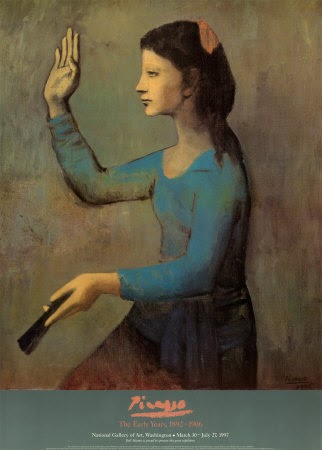
PICASSO, AN AVANT-GARDE GENIUS BUT AN INEPT LOVER


On October 25, 1881, in Malaga (Spain) was born one of the most avant-garde painters in the history of the arts. Pablo Picasso began his career as a painter at 10 years age. Eight years later he made his first solo exhibition. He always was innovative and revolutionary.  And although the social and personal influence on his career was important,  women were the ones that left their strong mark on his work.

Like any other artist, Picasso had muses, that inspired the work of this Sapnish painter and sculptor. Women in his life influenced largely along the different stages of life. They were the main source of inspiration and subject of many of his works. They loved him, cherished him, gave him children, but also hated him. In his paintings it could be seen clearly that when the relationship was getting worse the image of the lover is disfigured, was no longer worthy of being regarded in awe to be viewed with amazement and even disgust.

And in this post I am going to write something about all the women (or at least, the most important) who shared the life of Pablo Diego José Francisco de Paula Juan Nepomuceno Cipriano of the Holy Trinity Ruiz Picasso, as his birth certificate says (I will try not to be as long with the post as his name!).

Ferdinand Olivier. It was the first formal partner of the painter. Upon leaving that relationship, Fernandina model began to be a painter in Montmartre, France. In 1904, Pablo Picasso was in France, where he met the woman he fell in love. The following year, Picasso and Fernandina began living together, though jealousy between the two caused the painter to model prohibit someone else. The love between the two and Picasso was reflected in his works of "pink stage." However, the relationship ended in 1912 when the painter fell in love with another woman.


Eva Gouel. It was the painter's muse during his cubist collage. Some historians say it was the great love of Picasso. Eva died in 1915, a victim of tuberculosis, four years after starting a relationship with the painter. He made to her various works and even called her "Ma Jollie," a name that appears in many of his paintings. Eva's death caused great pain to Picasso, what prompted him not to make any commercial work for a year.


Olga Kokhlova. Picasso was interested in other arts such as music and dance. In 1917 the artist was designing the set for the musical "Parade" in Rome, when he met the Russian dancer. Olga, who belonged to the aristocratic class, was the first wife of the painter. In 1918 they married in a Russian Orthodox church in Paris. On February 4, 1921, Olga gave birth to the first son of the painter, called Paulo. During this period, Picasso left Cubism and began to work in numerous works with the topic of motherhood.


In 1924 Picasso and Olga began having marital problems, which were reflected in the work of Picasso. Three years later the painter began an affair with a woman 29 years younger. Pablo Picasso and Olga Kokhlova finally separated in 1929 but never divorced, and even the dancer always went on to say "I'm Olga Kokhlova, the genius lovingly endured for more than 12 years. I was legally his first wife and as almost all, he left me. I gave birth to her first child, Paul ".

Marie Therese Walter. The woman who dazzled the painter in 1927 when he was walking one day near the subway exit at the Galeries Lafayette. Picasso and Marie Therese lived a romance while the painter was married to Olga, and bought an apartment for her near the house where he lived with his wife. In 1935, first Picasso’s daughter was born, named Maya. However, the painter, who was not accustomed to married life style, disappeared and decided to send his wife and daughter to her mother's side and back to bohemian Paris.


Dora Maar. The friend of Pablo Picasso, Paul Eluard, introduced him to a beautiful girl with black hair and green eyes of the painter. Dora Maar, who enjoyed fame in the world of photography and held an eight-year relationship with Picasso, while he was painting the famous painting Guernica.


From 1936 to 1944 the relationship between them was intense. She was happy with him, but when the artist began to walk away, she showed a strange and paranoid behavior. Dora was treated by a psychiatrist and years later she said: "After Picasso, only God".

Francoise Gillot. Picasso abandoned Dora Maar after meeting this young artist of 23 years. The painter was then 62 years. Between 1943 and 1952 they lived together and they had two sons, Claude and Paloma. In the early 50's, the relationship began turning in disgust and in 1953 she decided to leave the artist.


Genevieve Laporte. It was the clandestine love of Picasso. At 16 years, Genevieve requested an interview with the artist for a student newspaper. The artist asked the girl to visit him every week and thus began the secret meetings. Next to the teenager, Picasso created paintings of great sensuality. The relationship ended after she left him and Picasso told his son Paulo: "Women whom I love, go away and women whom I don’t love, stick to me”.


Jacqueline Roque. Picasso had met her 20 years before seeing her again in a cafe near the Costa Azul. Jacqueline was 30 years and had a daughter and soon she became the secretary, messenger, nurse, slave and prison guard of the painter.In March 1961 she became the painter's second wife after the death of Olga and she lived next to Pablo Picasso until the day of his death on April 8, 1973. Picasso was 91 years old.


In October 1985, Jacqueline took her life in the house he had shared with the genius on the Costa Azul. And Marie Therese Walter took her life too four years later than Picasso died, Picasso’s phantom prevented her from having a life of her own. And Olga and Dora suffered mental disorders until the end of their lifes.

Picasso had a complex and conflicted personality, between cruelty and tenderness, who was quite romantic when he was starting a new relationhip but when he was tired of it he dind’t hesitate to look for new lovers. Even some people say about him that the more he was in love with a woman, the more he looked for the arms of new lovers.

One of his favourite sentences was: “Men don’t stop falling in love when they get older, but on the contrary, they get older when they don’t fall in love any more”. And another sentence he used to say was: “For me, there are two kind of women: goddesses and doormats”.

Once again, we can see that being a genius in some field has nothing to do with being a genius in personal life.


Source: de10.com.mx
Related Posts Plugin for WordPress, Blogger...